






CITS Export Control Resources:

Books
Reports
Articles
The Monitor

CITS Export Control Database

New Export Control News Site:

XC Blog


The Center for International Trade & Security

Export Control Newsletter No. 76

May 15, 2006 – May 29, 2006


What’s New at CITS


1.  International Export Control Conference


The Center for International Trade and Security hosted an international export control conference from May 29-31.  This conference brought together nongovernmental experts to focus on developing more effective export controls in order to stem the spread of weapons of mass destruction.  As part of the conference, CITS launched an International Export Control Association (IECA) – a network of experts committed to strengthening export controls through research, training, education and outreach.


2. April 2006 Russian Legislative Visit to Washington DC


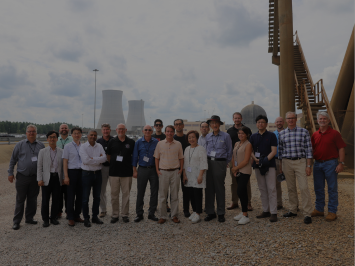
During April 22-28, 2006, the Center for International Trade and Security hosted a group of Russian legislative experts and representatives of Russian Federal agencies in Washington DC. This visit was organized jointly by CITS/UGA and the Institute of World Economy and International Relations of the Russian Academy of Sciences in Moscow (IMEMO) as part of CITS’ Legislative Outreach program. Support for this visit was provided by a two-year grant from the Carnegie Corporation of New York.  More


3.  New CITS Issue Brief Examines India’s Export Control Policy and Record


India's record on nuclear nonproliferation has come under scrutiny recently in the context of the proposed nuclear deal. This new issue brief from CITS examines Indian dual-use export controls from the perspective of assessing political commitment, institutional capacity, and specific cases of proliferation. It updates CITS report on Indian export controls [May 2005] by examining new developments in Indian policies and procedures. More


Export Control Newsletter


U.S. Export Controls


1.  “US defends curbs on high-tech sales to Beijing, Export Controls,” Financial Times (London, England), 24 May 2006.


2.  “San Jose man is charged in technology sale to China,” San Jose Mercury News/Knight Ridder, 23 May 2006.


International Export Control Development


1.  “Eurasian Bloc calls for stricter nonproliferation regime at Belarus meeting,” BBC Monitoring, 26 May 2006.


New Zealand


2.  “Military Link puts Rakon under spotlight,” The Press (Christchurch, New Zealand), 29 May 2006.


Pakistan


3.  “US Expert says A Q Khan case ‘far from closed’,” Hindustan Times, 27 May 2006.


4.  “Pak insists A Q Khan’s case is closed,” The Press Trust of India, 28 May 2006.


South Korea


5.  “Firms penalized for violating strategic product export rules,” Global News Wire – Yonhap, 28 May 2006.


Macedonia


6.  “Macedonia, US sign memorandum on accelerating export licensing procedure,” BBC Monitoring, 26 May 2006.


China


7.  “China Update,” Inside U.S. Trade, 26 May 2006.


United Kingdom


8.  “UK customs foils plot to sell WMD to hostile country,” The Scotsman, 26 May 2006.


Turkey


9.  “Turkish government report says missile parts, ‘dual use’ material reach Iran through Turkey,” Associated Press Worldstream, 26 May 2006.


Russia


10.  “Russian government commission urges tougher nonproliferation regime,” BBC Worldwide Monitoring, 22 May 2006.


Libya


11.  “Libya export controls may relax after state sponsor removal,” Inside U.S. Trade, 19 May 2006.


Kazakhstan


12.  “US gives Kazakh border guards three new patrol boats,” BBC Monitoring Worldwide, 18 May 2006.


U.S. Export Controls


1.  “US defends curbs on high-tech sales to Beijing, Export Controls,” Financial Times (London, England), 24 May 2006.

The US says a planned expansion of its controls on the export of high-technology goods to China will not be a burden for US companies and dismisses claims that its restrictions on high-tech exports are fuelling the trade deficit with China.

David McCormick, US undersecretary of commerce for industry and security, told the FT that the controls would be handled "in a very targeted way" and the department was certain they would "not place a burden on industry".

The US is preparing to enact restrictions on the sale to China of 46 new types of products in 10 categories - including specialised chemicals, lasers, electronics and telecommunications - in case those products find their way into the hands of the Chinese military.

A draft of the proposed restrictions was circulated in March and the US is expected to propose the changes formally after Mr McCormick returns from China, where he is briefing leaders on the plans.

Bill Reinsch, president of the National Foreign Trade Council, a US business group that opposes the controls, said that, while the commercial impact of the restrictions would be minimal, US exporters opposed the move. "We still don't think they've made the case that these are things that need to be controlled for national security reasons," he said.

The list was likely to annoy Beijing, Mr Reinsch said, as the items were drawn from a range of goods restricted only for states regarded as sponsoring terrorism on the US, such as Iran and North Korea.   

Chinese leaders have repeatedly said Washington could reduce bilateral trade imbalances by easing its controls on high-tech goods. But Mr McCormick said the Chinese claims were vastly overstated. Of the Dollars 41bn (Euros 32bn, Pounds 21.8bn) in US exports to China last year, about Dollars 2.4bn had involved licensed technology - and only Dollars 12.5m worth of goods had been denied export permission, Mr McCormick said.

"It's a fraction of a fraction of a fraction of the overall trade deficit," he said. "The numbers just don't, in any objective analysis, support any correlation between the trade deficit and our export control regime."

Mr McCormick also said Washington was moving to make it easier to sell high-tech products to legitimate civilian Chinese importers that had long-standing ties with US suppliers.   

The American Chamber of Commerce in China said many Chinese companies had told its members that they never bothered to approach US suppliers of high-tech goods "because of the uncertainty surrounding the approval and licensing programmes".


2.  San Jose man is charged in technology sale to China,” San Jose Mercury News/Knight Ridder, 23 May 2006.

A San Jose executive has been charged with illegally exporting technology to China that can be used to develop cruise missiles, according to documents filed last week in federal court in San Jose.

Yuequiang Chen, 45, also known as Bill Chen, was accused in a complaint with violating federal laws barring the export of military technology to China without a license from the U.S. Department of Commerce.

In an affidavit filed by federal agents, Chen is identified as the general manager of San Jose-based Data Physics, described as a maker of signal processing equipment for use in noise and vibration testing. The complaint alleges that Chen has for several years orchestrated the sale of the technology to a company in China believed to be a developer of cruise missiles. 


International Export Control Development


1.  “Eurasian Bloc calls for stricter nonproliferation regime at Belarus meeting,” BBC Monitoring, 26 May 2006.

Text of report by Belarusian news agency Belapan

Minsk, 26 May: The Interparliamentary Assembly of the Eurasian Economic Community [made up of Belarus, Kazakhstan, Kyrgyzstan, Russia, Tajikistan and Uzbekistan] calls on legislatures of other countries to support the initiative put forward by Russian President Vladimir Putin to create a network of international nuclear fuel cycle centres which "might become a precursor of a global infrastructure for using peaceful nuclear energy in the interests of mankind". A statement to this effect was adopted on 26 May at a session of the Interparliamentary Assembly of the Eurasian Economic Community in Minsk.

The document says that any use of nuclear energy for peaceful means "is an asset for all mankind". "Industrial uranium enrichment, which is not approved by the International Atomic Energy Agency, is a threat to stability and order," the statement stresses. To this end, the Interparliamentary Assembly of the Eurasian Economic Community says that "export controls over weapons of mass destruction shall be stepped up both at legislative and organizational levels". 


New Zealand


2.  “Military Link puts Rakon under spotlight,” The Press (Christchurch, New Zealand), 29 May 2006.

The Government should stop Auckland company Rakon exporting hardware specifically designed for smart bombs and missiles, the Green Party says.

It was revealed last August that Rakon's crystal oscillators were being used in global positioning systems (GPS) in United States smart bombs and missiles which were likely to have been used in Iraq.

The company said its products were specifically designed for the military but were able to be exported because they were not covered by the Ministry of Foreign Affairs "strategic goods" list.

Rakon products were being used in military items on the list but export controls did not apply to goods manufactured overseas.

Rakon emails show the company has worked on components designed to withstand radiation.

Greens MP Keith Locke said that raised questions about whether the components would be used in nuclear weapons, which would clash with New Zealand's anti- nuclear stance.

An investigation into Rakon's activities was needed, as was a strengthening of the export rules for military components, he said. 


Pakistan


3.  “US Expert says A Q Khan case ‘far from closed’,” Hindustan Times, 27 May 2006.

Leading American nuclear expert David Albright has told the U.S. Congress that it should not consider the nuclear proliferation case against Pakistani nuclear scientist A Q Khan as over, as there are a number of unanswered questions.

Participating in a hearing by the subcommittee on international terrorism and non-proliferation, Albright, the president of the Institute for Science and International Security (ISIS), said that the Bush Administration and American Congressmen should react with caution to a recent statement by the Pakistan Foreign Office spokesperson that the case against Dr Khan is now closed.

According to the Daily Times, Albright said that specific questions involving Iran include the extent of centrifuge assistance, the logistics of that assistance and the possible supply of nuclear weapon design supplied to Iran by the Khan network.

"These areas remain especially troubling as we try to determine exactly how close Iran could be to building nuclear weapons and what sensitive information may remain in circulation around the world that could fall into the hands of other enemies of the United States," Albright was quoted as telling the subcommittee.

He also said that the information supplied by the Pakistan Government to the IAEA and other governments "appears so far to be incomplete."

The Pakistan Government needed to provide "more assistance" to investigators, including the IAEA and affected governments "direct access to question Khan and his associates verbally," he added.

Albright also found the nuclear export control system created by Pakistan as not having so far been implemented.  


4.  “Pak insists A Q Khan’s case is closed,” The Press Trust of India, 28 May 2006.

Amid US lawmakers' calls for reopening a probe into disgraced Pakistani scientist A Q Khan's nuclear proliferation network, Islamabad has insisted that its investigation into the matter has been closed and ruled out permitting foreign interrogators to directly question him.

The nuclear proliferation case against Khan had been closed and all important information had been collected and shared with the International Atomic Energy Agency (IAEA) and the US, acting Foreign Office spokesman Suhail Mehmood told the media here.

"We have completed our investigations and shared information with the International Atomic Energy Association and the US. We do not have any new information to share with the US," Mehmood said.

He also ruled out permitting foreign interrogators to directly question Khan, who has been kept under house detention here. "However, we remain prepared for investigations on any new information that comes along the way." 


South Korea


5.  “Firms penalized for violating strategic product export rules,” Global News Wire – Yonhap, 28 May 2006.

The South Korean government said Sunday it has taken punitive action against six local companies for exporting products that could be used for military purposes.

The Ministry of Commerce, Industry and Energy said the companies that violated the strategic export control rules were detected by examining export records of chemical products that could be used to make weapons.

Of the six companies, three will be barred from dealing with strategic control materials for three months, while three others were issued "severe" administrative warnings.

Authorities did not reveal the names of the companies, but said the chemicals discovered in the latest inquiry went to China, Bangladesh, Mexico and the United States. Of the 38 cases of illegal exports, 25 involved shipments of sodium sulfide. Other chemicals involved were triethanolamine and hydrogen fluoride.

"This latest probe only involved the Commerce Ministry, but in the future a joint operation will be conducted with the Korea Customs Service," an official said. While the measures taken this time were light because of the destination of the products and the fact that none were used to make weapons, such leniency may not be repeated, he said.

He made it clear that companies found to have broken rules will have to pay for their mistakes. 


Macedonia


6.  Macedonia, US sign memorandum on accelerating export licensing procedure,” BBC Monitoring, 26 May 2006.

Text of report in English by Macedonian state news agency MIA

Skopje, 26 May: Mitigation of export and acceleration of the process of approval and issuing of licenses for dual-use goods and technologies is the objective of the memorandum of understanding, which Economy Minister Fatmir Besimi and US Ambassador to Macedonia Gillian Milovanovic signed on Friday [26 May].

The memorandum enables instalment of a computer system in Macedonia for processing of requests submitted by companies for export of dual-use items. Furthermore, a software system for networking of ministries included in the export control will be established. The system will include entering, processing, monitoring, inspection and approval of requests for export licenses.

According to US Ambassador Milovanovic, the objective is that Macedonia and USA work together on mitigation of legal trade, i.e. control of export of goods, which are useful, but can also be dangerous.

Legal export of Macedonian companies will be alleviated, and we will be certain that both US and Macedonian citizens will be protected from inappropriate, i.e. illegal export, Milovanovic stressed.

Economy Minister Besimi stated that the memorandum included Macedonia in the international processes for export control. 


China


7.  China Update,” Inside U.S. Trade, 26 May 2006.


BIS DELAYS DEEMED EXPORT RULE, CREATES GROUP TO STUDY ISSUE

The Commerce Department's Bureau of Industry and Security (BIS) on May 22 announced that it would delay the establishment of a new rule that would describe when foreign nationals working in the U.S. must be covered by an export license in order to work on or use sensitive goods and technology. Instead of new "deemed export" rules, BIS announced the creation of a new industry advisory group that will examine current U.S. rules and decide whether and how to adjust them.

While some industry sources welcomed the BIS decision to delay the deemed export controls in light of industry opposition, one source said the delay appears to be more of a tactical retreat in light of industry opposition to its initial proposal to strengthen the rules. This source said BIS has "every intention" to move forward on the rule, and that industry groups should see the notice as a new beginning to the process, not the end of it.

BIS also indicated in its May 22 Federal Register notice that it still believes some steps need to be taken to address the spread of sensitive technology to foreign nationals working in the U.S.


United Kingdom


8.  UK customs foils plot to sell WMD to hostile country,” The Scotsman, 26 May 2006.

BRITISH investigators have foiled an attempt to smuggle a weapon of mass destruction to a hostile state, it was revealed yesterday.

Officers from HM Customs and Revenue claim to have disrupted an operation involving WMDs and are trying to piece together enough evidence to bring the case to court. But they have admitted that the individuals involved are still at large.

The revelations emerged in evidence from HM Revenue and Customs officials to a hearing of the House of Commons committee on strategic export controls.

The committee was told investigators looking into the smuggling of weapons of mass destruction were working on a case outside the UK.

The case is understood to involve a UK citizen accused of trying to sell a WMD to a state covered by sanctions or embargoes. The transaction is thought to have involved the WMD being moved from a third country, and there is no suggestion it was destined for the UK. 


Turkey


9.  “Turkish government report says missile parts, ‘dual use’ material reach Iran through Turkey,” Associated Press Worldstream, 26 May 2006.

An Iranian-owned company, based in Turkey, has illegally shipped alleged guided missile parts as well as "dual use" nuclear-related material to Iran, including high-strength aluminum tubes, according to a recent Turkish government report obtained by The Associated Press on Friday.

The company imported the material to Turkey, the supposed end-user, from dozens of firms around the world, including the United States, and then shipped them to Iran apparently after falsifying documents to hide the nature of the material, customs inspectors said in the report dated May 12.

Turkish authorities would not comment on the report, which was first published by Cumhuriyet and Milliyet newspapers Friday. A government official provided a copy of the report to the AP.

On Friday, Turkey hosted a multinational exercise to practice intercepting weapons materials before they reach a country like Iran, Turkey's neighbor. Warships from the United States, Turkey, France and Portugal participated in the maneuvers, said to be the largest so far of the Proliferation Security Initiative, or PSI, a program started in 2003 by U.S. President George W. Bush.

U.S. Secretary of State Condoleezza Rice has credited PSI with several successes already in intercepting shipments of missile and nuclear technology headed to Iran, but she did not elaborate on details.

The reported Turkish crackdown on the activities of the Istanbul-based company Step Standard Technical Part has highlighted the importance of Friday's exercise, but also revealed the need to increase scrutiny of shipment of "dual-use" material which can either be used for civilian purpose or to make weapons. A sister company Multimat Import and Export was also involved.

The companies' Iranian owners denied that they had given guarantees to foreign companies that the end-user would be Turkey, the report said adding, however, that "their statement was not true." Company officials could not be reached for comment.

One particular sensitive shipment that reached Iran early this year contained aluminum tubes, which were of the proper size and material listed as "dual-use" material, the report said. Such equipment could possibly be used to construct centrifuges for uranium enrichment.

In another shipment, the companies bought from France an equipment called "gyros," which can be used to increase the sensitivity of the guidance system of missiles and directly transferred them to Iran in 2004, the report said.

"It is believed that the two companies have escaped from strict export controls by listing Turkey as the destination," the inspectors said. They said they have asked customs authorities in Germany, the Netherlands, Britain, France, the United States and Canada to launch investigations into shipments that originated from those countries.

Turkish authorities have also recently stopped a shipment of aluminum material to Iran at the last minute, seizing the material at Gurbulak border point with Iran.

The report said authorities have confiscated documents and computers from the companies and that the investigation was still underway. Most of the shipments to Iran by the companies included dual use material of aluminum, steel and iron products and electronic equipment which can be used in defense industry, it said. 


Russia


10.  “Russian government commission urges tougher nonproliferation regime,” BBC Worldwide Monitoring, 22 May 2006.

Text of report by Russian news agency RIA Novosti

Moscow, 22 May: A government export control commission chaired by Deputy Prime Minister and Defence Minister Sergey Ivanov, at a meeting on Monday [22 May], discussed some issues of the Russian Federation policy in the sphere of nonproliferation of weapons of mass destruction, the government's press service told journalists today.

The commission also addressed issues dealing with the process of streamlining the export control system.

In particular, the meeting discussed measures to ensure that Russia implements UN Security Council resolution No 1540, as well as the strategy and tactics of action in the group of nuclear suppliers, the press service said.   

The meeting also worked out a set of coordinated measures for all interested federal departments, which are aimed at creating conditions for Russia's accession to the so-called Australian Group within which a multilateral export control procedure is functioning efficiently.

The export control commission will hold its next meeting in August, the press service said.


Libya


11.  Libya export controls may relax after state sponsor removal,” Inside U.S. Trade, 19 May 2006.

The Bush Administration's announcement this week that it intends to remove Libya from the list of state sponsors of terrorism could lead to a relaxation of export controls for some dual-use items, but does not automatically mean any controls will be relaxed, according to private-sector sources.

These sources say they can reasonably expect anti-terrorism-only (AT-only) items sent to Libya would no longer be subject to licensing requirements, but cautioned that this change is not automatic. Other items might benefit from regulatory changes that would make it more likely for U.S. exporters to obtain an export license for Libya. But these sources stressed that it is for now unclear what exact changes might be made.

The Export Administration Regulations (EAR) currently use Libya's status as a supporter of international terrorism as justification for certain controls, including AT-only controls and controls for members of Country Group E:1, a list reserved for state sponsors of terrorism, according to private-sector sources.

These sources said they expected the Bureau of Industry and Security (BIS), in consultation with the State and Defense departments, to rewrite the regulations some time after Libya's removal from the list of state sponsors of terrorism. The process would likely result in either the removal of some controls or their retention under a new justification, these sources said.   

BIS is reviewing the State Department's May 15 determination on Libya to determine what exact regulatory changes are needed, according to a government official.

An easing of export controls on goods sent to Libya is likely to have a significant impact on the oil and gas industry, which currently faces controls on a number of high-tech items.

For example, oil well perforators, which are explosives used in drilling, are now subject only to AT controls, which means export license applications are reviewed on a case-by-case basis, sources said. These perforators could no longer require a license with the removal of Libya from the state sponsors of terrorism controls, they said.

One private-sector source said there could also be a dramatic impact on exports of high-tech consumer items that require a license under the AT controls, and are also subject to a separate ban when exported to Libya.

These items, which include software, hardware and plans used to create software and hardware, could be freed up for export if BIS removed the AT-only controls against Libya and lifted the ban on the export of these items. One source indicated that BIS might still decide to review exports of encryption technology that is shipped to non-government users in Libya, and said it is unlikely that encryption technology would be permitted for export to the Libyan government.

Some license requirements for items not on the Commerce Control List (CCL) could also be dropped as a result of Libya's removal from a terrorist-supporting country designation in EAR regulations, according to an informed source. Licenses would probably not be needed for these EAR-99 items, because Commerce requires them due to Libya's inclusion on the state sponsor list.

Under current rules, exports of EAR-99 items to Libya are generally free from license requirements, but there are some exceptions that require licenses. EAR-99 items are items subject to export controls through BIS that are not on the CCL.

Additionally, the policy under which BIS requires companies active in Libya to report suspected violations of previous trade restrictions could be modified to cover AT-only items. Under this policy, companies that find AT-only items in Libya that entered the country before they were allowed would have to notify this to BIS (Inside U.S. Trade, June 10, 2005, p. 1).

The prohibition on munitions list exports to Libya would not be affected by Libya's removal from the state sponsors of terrorism list, according to State Department sources. However, Rice's May 15 announcement on Libya would lift two criteria that require a munitions list ban. 


Kazakhstan


12.  “US gives Kazakh border guards three new patrol boats,” BBC Monitoring Worldwide, 18 May 2006.

Excerpt from report by Interfax-Kazakhstan news agency

Aktau, 18 May: A ceremony to hand over three new 42-feet-long rapid reaction patrol boats along with trailers and spare parts from the USA to the Caspian naval division of the Kazakh National Security Committee's Border Service was held today in Aktau (administrative centre of Mangistau Region, western Kazakhstan), an Interfax-Kazakhstan correspondent reports.

The total cost of the boats is 2m dollars, says a press release circulated during the ceremony by the US embassy in the republic.

Source: Interfax-Kazakhstan news agency, Almaty, in Russian 0926 gmt 18 May 06


You are currently subscribed to the CITS Export Control Newsletter. The Newsletter is a biweekly update of the Center’s recent reports, publication, and events. To subscribe or unsubscribe please contact the editor, jonesing@uga.edu