UGA Logo Office of Public Affairs Public Affairs 2
News Service UGA home link
Search link
Contact Us
UGA NEWS Service
News Release
Last Updated: Sep 23rd, 2009 - 16:32:23
Search


For releases prior to July 2003

UGA News Bureau

Top News Storiesmore...
In the Newsmore...
Master Calendarmore...
Advisoriesmore...
All News Releasesmore...
Columnsmore...
Faculty/staff newspaper
News from Schools & Colleges more...
Media Resources
Campaign and election experts more...
Back to School Features more...
Media contacts more...
Experts directory more...
e-Newsmore...
Put UGA's top stories on your sitemore...
Special Reports

Latest budget information

Arch News - August 7, 2009
Response to Board of Regents request for UGA budget plan

Arch News - July 22, 2009
Budget update

University of Georgia President Michael F. Adams gave a budget update to the UGA community during the April 23 meeting of the University Council at the Georgia Center for Continuing Education Conference Center and Hotel. A video presentation and talking points are available for viewing.

Arch News - April 22, 2009
Upcoming budget presentation

Arch News - April 10, 2009
Status of the FY10 state budget

UGA president provides budget update
University of Georgia President Michael F. Adams gave members of University Council an update on UGA’s budget Thursday, Dec. 4 in wake of recent actions by the University System of Georgia Board of Regents to help meet an anticipated directive from state officials to increase the budget cut to 8 percent from the current 6 percent.
View December 4, 2008 Budget Update

Public forum on University Budget
On Wednesday, Sept. 17, President Michael F. Adams and other senior university officials delivered a presentation about the impact of current economic challenges and responded to questions from the audience. Links to archived video of the first budget forum on Sept. 5.
View September 1, 2008 forum online →
View September 5, 2008 forum online →
President's talking points [pdf] →
UGA Fiscal Update [ppt] →

Information on the April 25 off-campus shooting more...
Information on the national outbreak of H1N1 virus (commonly known as swine flu) more...
President's speeches more...
UGA's Master Plan more...
The UGA Century more...
40th Anniversary of
UGA's Desegregation more...
UGA Responds: 9/11 more...
Featured Research more...
Commencement Addresses more...
ARCHE Reports more...
University System of Georgia
news publications
Legislative Updates more...
The System Supplement more...
Value-Added USG Serves Georgiamore...
A Worthy Investmentmore...
UGA Open Records
Request procedure, form and FAQsmore...
The Office of the Attorney General of Georgiamore...
The Georgia Secretary of State Open Recordsmore...
The Georgia First Amendment Foundationmore...
Contact UGA Open Records Managermore...

New cost-effective method of farming Siberian sturgeon for caviar could protect wild sturgeon, boost economy
Writer: Sam Fahmy, 706/542-5361, sfahmy@uga.edu
Contacts: Douglas Peterson, 706/542-2944, dpeterson@warnell.uga.edu; Bill Demmond, 678/373-4507, bill.demmond@inlandseafood.com
Aug 17, 2009, 16:11

Email this article
Printer friendly page

Athens, Ga. – Caviar is one of the world’s most prized delicacies, but overfishing has pushed wild sturgeon to the brink of extinction. A new, cost-effective and environmentally sustainable method for farming sturgeon pioneered by a University of Georgia professor has the potential to protect wild sturgeon populations while creating a lucrative agricultural commodity.

“Historically, farmed caviar has comprised two percent of the world’s market while 98 percent has come from wild sturgeon,” said Doug Peterson, associate professor of fisheries and aquaculture in the Warnell School of Forestry and Natural Resources. “We’re trying to flip the market so that in 10 years it will be 98 percent farmed and two percent wild. That’ll be good for wild sturgeon populations and for farmers.”

Domestic white sturgeon have been successfully farmed in Northern California for decades, but attempts to farm Russian species in North America have been stifled by high start-up costs and the tendency of farmed caviar to have a muddy or “off” taste. Peterson has created a new method of raising Siberian sturgeon that combines readily available aquaculture technology with a highly efficient filtration system and fresh spring water from the mountains of Northwest Georgia. The result is environmentally sustainable caviar whose taste rivals that of wild-caught.

“It has a very clean beginning and a clean end, and that’s what a lot of people are looking for,” said Michel Emery, director of sales and purchasing for Petrossian, Inc., the world’s leading caviar distributor. “Overall, I was very happy with the first production; it’s a beautiful product.”

The UGA Premium Siberian Sturgeon Caviar will be sold by Inland Seafood of Atlanta in containers that bear the UGA Athletics Association logo beginning this month. All proceeds support sturgeon conservation and aquaculture research at UGA. “This really is a win-win for consumers and for wild sturgeon populations,” said Bill Demmond, chief operating officer at Inland Seafood and a 1973 UGA graduate. “Not only is this an excellent-tasting product, but it’s also sustainably raised on a farm.”

Peterson’s filtration system recaptures and recirculates approximately 90 percent of the water that the sturgeon live in during their seven-year growth phase. To simulate the portion of the sturgeon’s life in which it stops feeding and swims upstream to spawn, the fish are moved into a separate tank supplied with a gentle flow of cold, fresh spring water. Peterson said this “conditioning time” in the pristine spring water eliminates any off tastes and allows the eggs to mature slowly until they’re at their peak of flavor.

He added that the highly controlled environment that the fish are raised in means that farmed caviar can be of better quality than wild-caught. With the aid of a small endoscope, sturgeon farmers can examine the eggs as the fish are developing, harvest the caviar at peak ripeness and then immediately package and ship the product. But since farmed sturgeon lack the natural variability of wild-caught fish, which are harvested at various ages and eat a more diverse diet, Peterson anticipates that there will continue to be a small—and sustainable—market for wild-caught caviar.

This year, Peterson expects to produce about 50 kilograms of caviar with a retail value of approximately $120,000. Next year, he expects to double the inaugural yield for a total of approximately 100 kilograms. His long-term goal, however, is to lay the foundation for a viable Siberian sturgeon farming industry in North America. Already, he’s shown how startup costs for a commercial sturgeon farm can be greatly reduced by using simple construction materials and readily available water treatment technologies. Peterson is currently experimenting with various tank configurations and sturgeon feeds to bring costs down even further. He’s also screening potential investors who are interested in commercializing the venture.

The spring water from UGA’s 65-acre Cohutta Fisheries Center is responsible for the caviar’s nutty and clean taste, but Peterson is developing business models that don’t require farmers to have access to an on-site spring. In a model that mirrors the poultry industry, young sturgeon—known as fingerlings—can be sold to farmers who grow the sturgeon before selling them back to the producer, who conditions them with spring water before harvesting and selling the caviar.

Caviar has been traded for centuries and, despite the current economic downturn, Peterson says that the market for sustainable, high-quality farm-raised caviar will see tremendous growth over the next decade. The main challenge to the industry, Peterson said, has been the precipitous decline of wild sturgeon populations. He explained that longstanding problems such as the construction of dams that block migrations and environmental degradation have been exacerbated by the rampant overfishing that occurred following the abandonment of strict catch limits imposed by the former Soviet Union.

“My whole career has been focused on understanding the biology of these ancient animals—they were swimming the seas when the dinosaurs were roaming the Earth and even today, they remain largely unchanged,” Peterson said. “In just a flicker of geological time, we’ve nearly exterminated them. And one of the most important things we can do to help bring sturgeon back from the brink is to change the foundation of the caviar industry so that it relies on high-quality, sustainably farmed fish. The UGA caviar project has shown that there is no reason why we can’t save the sturgeon while spurring new economic opportunities in Georgia’s agricultural economy.”

Peterson’s research has been supported by the UGA Office of the Vice President for Research, the Georgia BioBusiness Center, and the Georgia Research Alliance.

For more information on UGA Premium Siberian Sturgeon Caviar, contact Inland Seafood at 404/350-5850 or 800/883-3474.

##

Note to editors: Photos are available for download below.

UGA Premium Siberian Sturgeon Caviar label: Proceeds from the sale of UGA Premium Siberian Sturgeon Caviar support sturgeon conservation and aquaculture research at the university.

http://www.uga.edu/news/photos/UGA-Siberian-Sturgeon-Caviar-Label.jpg

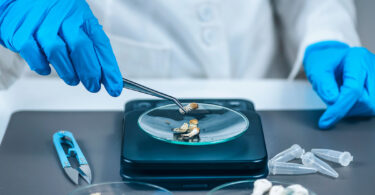
UGA Premium Siberian Sturgeon Caviar is processed and packaged at the Food Sciences Lab in the UGA College of Agricultural and Environmental Sciences. Credit: Stephanie Schupska/UGA

http://www.uga.edu/news/photos/UGA-Siberian-Sturgeon-Caviar2.jpg

Doug Peterson in the UGA Warnell School of Forestry and Natural Resources has developed a cost-effective and sustainable method of farming Siberian sturgeon for caviar. Here, he holds a young sturgeon at the UGA Cohutta Fisheries Center in northwest Georgia. Credit: Peter Frey/UGA

http://www.photo.alumni.uga.edu/news/25764-074.jpg


Top of Page


Today is Sunday, November 22, 2009 09:42 AM EST

UGA Today is produced by the UGA News Service, a unit of UGA Public Affairs.
Hodgson Oil Building, Suite 200N
286 Oconee Street
Athens, GA  30602-1999
Phone 706/542-8083 • Fax 706/542-3939
Questions, comments and suggestions should be directed to news@uga.edu


UGA Home | External Affairs | Columns | Georgia Magazine
Publications / UGA Identity Materials | Broadcast and Video | Photographic Services
UGA Athletics | UGA Events | Visitors Center | Admissions | Directories | Search