Go to the group's home page
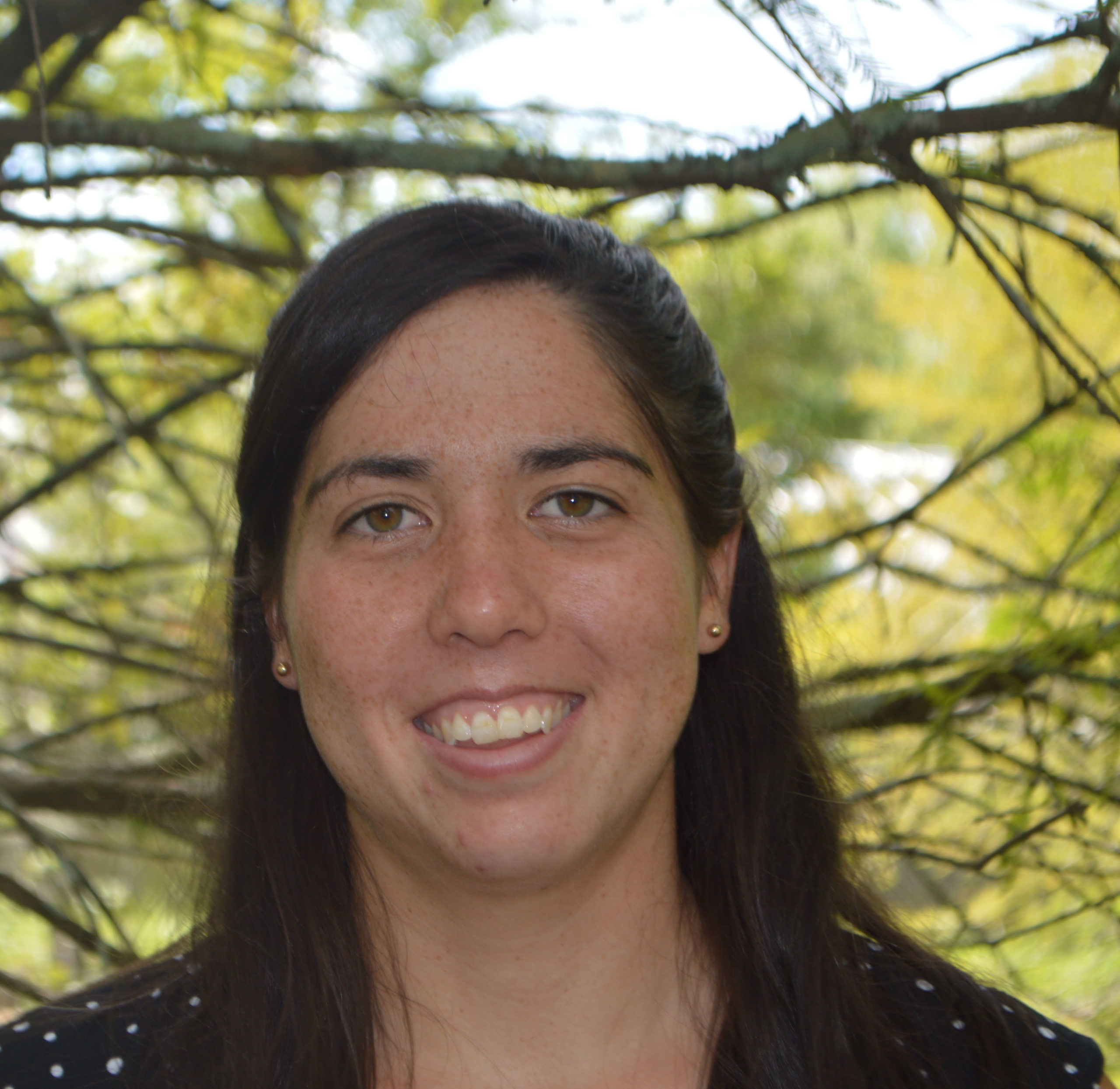
Dr. Barbara Taylor


Go to the SREL homepage


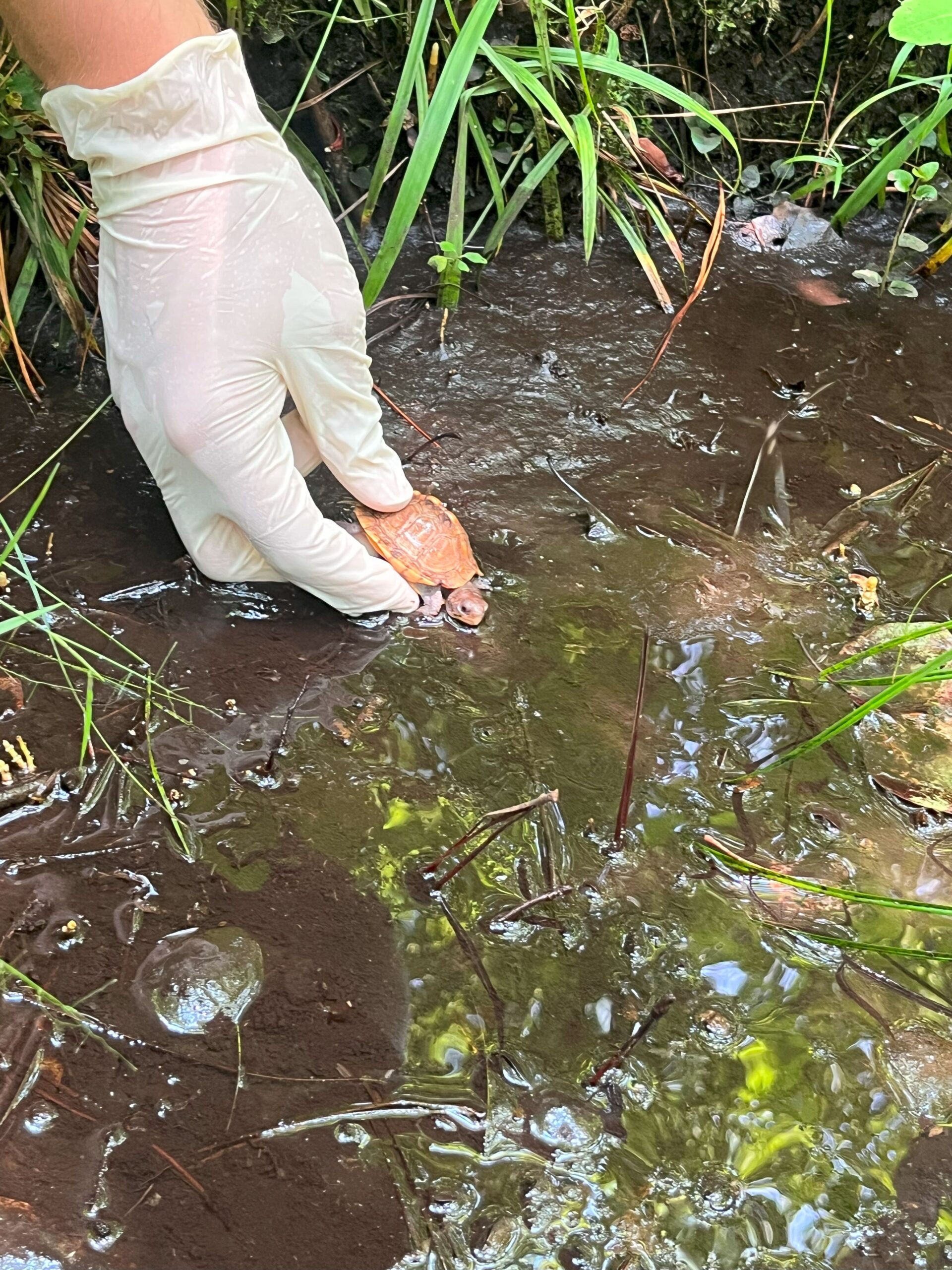
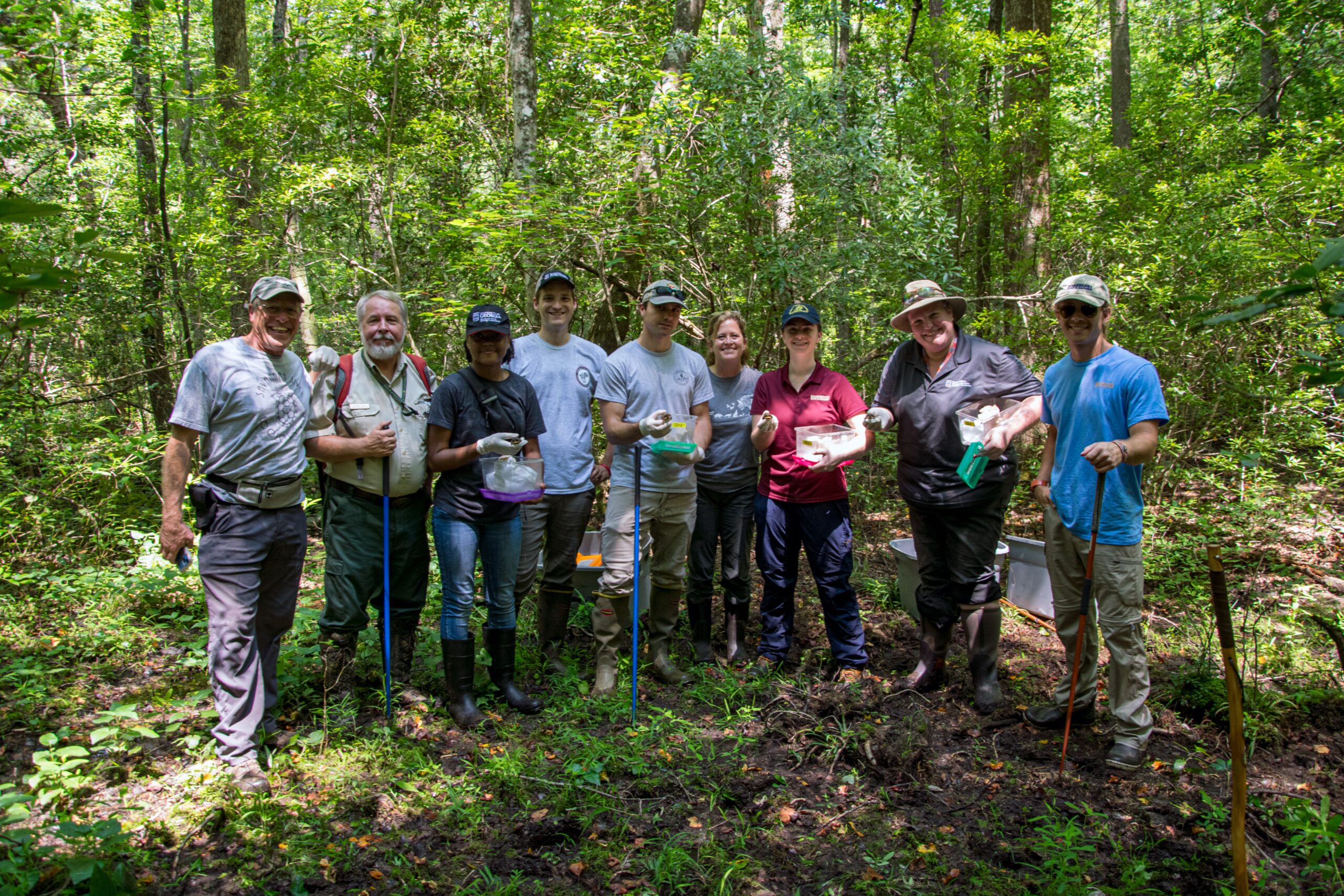
Dr. Taylor viewing samples collected on SRSMy research interests are: freshwater ecology and population ecology. My current research projects include studies of contaminantdynamics in an abandoned cooling reservoir; population dynamics of pond-breeding amphibians; production and trophic interactions of invertebrates in a Carolina bay; assessment of wetland pond communities to evaluate potential response to hydrologic alteration; seasonal succession and overwintering strategies of zooplankton; regional biogeography of microcrustaceans; environmental histories of Carolina bays and Holocene changes in the southeastern landscape.

SELECTED PUBLICATIONS

Taylor, B. E., D. E. Scott, and J. W. Gibbons. 2006. Catastrophic Reproductive Failure, Terrestrial Survival, and Persistence of the Marbled Salamander. Conservation Biology 20 (3), 792-801.

Taylor, B.E. 2005. Aquatic invertebrates. p. 161-175. In Biotic Communities. In Ecology and Management of a Forested Landscape: Fifty Years on the Savannah River Site, edited by J.C. Kilgo and J.I. Blake. Island Press. Washington, DC.

Batzer, D. P., S. E. Dietz-Brantley, B. E. Taylor and A. E. DeBiase. 2005. Evaluating regional differences in macroinvertebrate communities from forested depressional wetlands across eastern and central North America. Journal of North America Benthological Society 24:403-414.

Taylor, B. E. and A. E. DeBiase. 2005. Are microcrustaceans useful for assessing success of wetland pond restoration? (South Carolina). Ecological Restoration 23:56-57.

Hopkins, W. A., B. P. Staub, J. W. Snodgrass, B. E. Taylor, A. E. DeBiase, J. H. Roe, B. P. Jackson and J. D. Congdon. 2004. Responses of benthic fish exposed to contaminants in outdoor microcosms - examining the ecological relevance of previous laboratory toxicity tests. Aquatic Toxicology 68:1-12.

Gaiser, E. E., M. J. Brooks, W. F. Kenney, C. L. Schelske and B. E. Taylor. 2004. Interpreting the hydrological history of a temporary pond from chemical and microscopic characterization of siliceous microfossils. Journal of Paleolimnology 31:63-76.

Staton, J. L., B. E. Taylor, N. V. Schizas, R. Wetzer, T. C. Glenn and B. C. Coull. 2003. Mitochondrial gene diversity of Skistodiaptomus mississippiensis in impoundments of the upper coastal plain near Aiken, South Carolina, USA. Arch. Hydrobiol 158:215-231.

DeBiase, A. E. and B. E. Taylor. 2003. New reports of fairy shrimps (crustacea: anostraca and clam shrimps (crustacea: laevicaudata and spinicaudata) from South Carolina. Southeastern Naturalist 2:207-216.


Dietz-Brantley, S. E., B. E. Taylor, D. P. Batzer and A. E. DeBiase. 2002. Invertebrates that aestivate in dry basins of Carolina Bay Wetlands. Wetlands 22:767-775.

Gaiser, E. E., B. E. Taylor and M. J. Brooks 2001. Establishment of wetlands on the southeastern Atlantic Coastal Plain: paleolimnological evidence of a mid-holocene hydrologic threshold from a South Carolina pond. Journal of Paleolimnology 26:373-391.

Brooks, M. J., B. E. Taylor, P. A. Stone, and L. R. Gardner. 2001. Pleistocene encroachment of the Wateree River sand sheet into Big Bay on the Middle Coastal Plain of South Carolina. Southeastern Geology 40:241-257.

Dietz, S. E., D. P. Batzer, B. E. Taylor, and A. E. DeBiase. 2001. Invertebrate communities of twenty ditched Carolina bay wetlands scheduled for restoration. p. 321-324. In Proceedings of the 2001 Georgia Water Resources Conference, edited by K. J. Hatcher, Institute of Ecology, The University of Georgia, Athens, GA.

Medland, V. L., and B. E. Taylor. 2001. Strategies of emergence from diapause for cyclopoid copepods in a temporary pond. Arch. Hydrobiol. 150:329-349.

DeBiase, A. E., and B. E. Taylor. 2000. A new calanoid copepod species from South Carolina, U.S.A.: Aglaodiaptomus savagei (Crustacea: Copepoda: Calanoida: Diaptomidae). Proceedings of the Biological Society of Washington.113:681-689.

Lewis, G.P., B.E. Taylor, J.E. Pinder, III, and P.M. Dixon. 2000. Apparent decline of the sediment 137 Cs inventory of an abandoned reactor cooling reservoir: export or uncertainty? Journal of Environmental Radioactivity 49:293-306.

Saunders, P.A., K.G. Porter, and B.E. Taylor. 1999. Population dynamics of Daphnia spp. and implications for trophic interactions in a small, monomictic lake. Journal of Plankton Research 21:1823-1845.

Taylor, B.E., D.A. Leeper, M.A. McClure, and A.E. DeBiase. 1999. Carolina bays: ecology of aquatic invertebrates and perspectives on conservation. p. 167-196. In Invertebrates of Freshwater Wetlands of North America: Ecology and Management, edited by D.P. Batzer, R.B. Rader, and S.A. Wissinger. John Wiley & Sons, Inc.

Williams-Howze, J., B.E. Taylor, P.M. Biesiot, and G. Seaborn. 1998. Lipid analysis of Aglaodiaptomus stagnalis Forbes and their desiccation resistant diapause eggs. Arch. Hydrobiol. Spec. Issues Advanc. Limnol. 52:493-506

Leeper, D.A. and B.E. Taylor. 1998. Abundance, biomass and production of aquatic invertebrates in Rainbow Bay, a temporary wetland in South Carolina, USA. Arch. Hydrobiol. 143:335-362.

Gaiser, E.E., T.E. Philippi, and B.E. Taylor. 1998. Distribution of diatoms among intermittent ponds on the Atlantic Coastal Plain: development of a model to predict drought periodicity from surface-sediment assemblages. Journal of Paleolimnology 20:71-90.

Grant, J.A., M.J. Brooks, and B.E. Taylor. 1998. New constraints on the evolution of Carolina bays from ground-penetrating radar. Geomorphology 22:325-345.

Leeper, D.A. and B.E. Taylor. 1998. Insect emergence from a South Carolina (USA) temporary wetland pond, with emphasis on the chironomidae (diptera). Journal of the North American Benthological Society 17:54-72.

Philippi, T., P.M. Dixon, and B.M. Taylor. 1998. Detecting trends in species composition. Ecological Applications 8:300-308.

DeBiase, A.E. and B.E. Taylor. 1997. Aglaodiaptomus atomicus, a new species (Crustacea: Copepoda: Calanoida: Diaptomidae) from freshwater wetland ponds in South Carolina, U.S.A., and a redescription of A. saskatchewanensis (Wilson 1958). Proceedings of the Biological Society of Washington 110:569-580.

Taylor, B.E. and D.E. Scott. 1997. Effects of larval density dependence on population dynamics of Ambystoma opacum. Herpetologica 53:132-145.

Brooks, M.J., B.E. Taylor, and J.A. Grant. 1996. Carolina Bay geoarchaeology and holocene landscape evolution on the upper coastal plain of South Carolina. Geoarchaeology 11:481-504.

Leeper, D.A. and B.E. Taylor. 1995. Plankton composition, abundance and dynamics in a severely stressed cooling reservoir. Journal of Plankton Research 17:821-843.

Boileau, M.G. and B.E. Taylor. 1994. Chance events, habitat age, and the genetic structure of pond populations. Archiv fuer Hydrobiologie 132:191-202.

DeBiase, A.E. and B.E. Taylor. 1993. New occurrences of Eurytemora affinis and Epischura fluviatilis, freshwater calanoid copepod species of the family Temoridae, in South Carolina. The American Midland Naturalist 130:386-392.

Taylor, B.E. and W. Gabriel. 1993. Optimal adult growth of Daphnia in a seasonal environment. Functional Ecology 7:513-521.

Taylor, B.E., A.E. DeBiase, and D.L. Mahoney. 1993. Development of the zooplankton assemblage in a new cooling reservoir. Archiv fuer Hydrobiologie 128:129-148.


Please contact me at:
Savannah River Ecology Laboratory
Post Office Drawer E
Aiken, South Carolina 29802
Tayloratsrel.edu


Curriculum Vitae