|
|
|
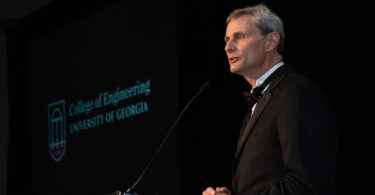
Lee S. Shulman, president of the Carnegie Foundation for the Advancement of Teaching, will give the 1998 Louise McBee Lecture at the university Oct. 19 at 11 a.m. in the Chapel.
The lecture is entitled Fostering a Scholarship of Teaching and Learning. It is free and open to the public.
In addition to being the eighth president of the Carnegie Foundation for the Advancement of Teaching, Shulman is Charles E. Ducommun Professor of Education and Pyschology at Stanford University. He was previously on the faculty of Michigan State University, where he was professor of educational psychology and medical education and founding co-director of the Institute for Research on Teaching.
A native of Chicago, Shulman received a bachelors degree in philosophy from the University of Chicago, where he also received masters and doctoral degrees in educational psychology. Since then, his research has focused on the way in which various kinds of knowledge--of content, of pedagogy, of learners and of particular subject areas--foster good teaching. His investigations have involved extensive longitudinal studies of how new teachers learn to teach at all levels and in all core disciplines. Recently he has led a major national project sponsored by the American Association of Higher Education in which college teaching has been examined as a scholarly and peer-reviewed activity.
Shulman is former president of the American Educational Research Association, where he received the career award for distinguished contributions to educational research. He is also past president of the National Academy of Education and has received the American Psychological Associations E.L. Thorndike Award for Distinguished Psychological Contributions to education. He has also been a Guggenheim Fellow and a Fellow of the Center for Advanced Study in the Behavioral Sciences.
The Louise McBee Lectureship in Higher Education was established in 1988 to honor M. Louise McBee, vice president for academic affairs emerita at the University of Georgia. McBee lecturers are distinguished scholars or experts in the field of higher education; in addition to delivering the annual McBee lecture, they conduct seminars and participate in the life of the campus during their visit. The lecture is sponsored by the Institute of Higher Education, where McBee served as a member of the faculty.
Louise McBee, a native of Strawberry Plains, Tenn., earned her bachelors degree from East Tennessee State College in 1946, a masters degree from Columbia University in 1951 and a Ph.D. from Ohio State University in 1961. After teaching high school in Marion, Va., she joined the faculty at East Tennessee State University, where she spent 11 years in various positions. She came to the University of Georgia in 1963 and served as dean of women and dean of students; when she retired from the university in 1988 she was acting vice president for academic affairs. She is now serving her third term as a representative in the Georgia General Assembly.
|
|
|
|
|
|
|
Ralph McGill Lecture.
Newspaperin g in the 90s--Idealism Meets Financial Reality and Survives, Jay Smith, president, Cox Newspapers. Oct. 16, 2:30 p.m. Georgia Hall, Tate Student Center. 542-9536.
Smith, who has been president of Cox Newspapers since 1994, will draw from his extensive background in newspaper management for his presentation. Prior to his current position, he spent seven years as publisher of the Atlanta Journal-Constitution.
Smith has also headed the Austin (Texas) American-Statesman and the Dayton (Ohio) Daily News. He joined Cox in 1971 as a reporter at the Dayton paper, where he eventually worked as assistant city editor, assistant managing editor and business manager. He has been in the newspaper business since the age of 17.
He is a native of Cincinnati and a 1971 graduate of the Ohio State University School of Journalism. He earned a masters degree in public administration from the University of Dayton in 1975. He has served as chair to the advisory committee of the OSU journalism school and is currently on the boards of the Newspaper Association of America and the American Press Institute.
The McGill Lecture was established in 1977 to honor the life of Ralph McGill, who worked for the Atlanta Constitution before his death 29 years ago. He is best-known for his moving editorials on civil rights and is frequently referred to as the conscience of the South. He spent more than 40 years as a journalist, joining the Constitution as a sports writer and later becoming editor and publisher.
The lecture is sponsored by the Grady College of Journalism and Mass Communication.
Concert.
Sheila Kay Adam s, Appalachian ballad singer, storyteller and guitar player. $16. 8 p.m. Ramsey Hall, Performing Arts Center. 542-4400.
Raised in a small mountain community in western North Carolina, Sheila Kay Adams maintains the tradition of passing down the English, Scottish and Irish ballads that came over with her ancestors in the late 1700s. In 1998, Adams received the Brown-Hudson Folklore Award from the North Carolina Folklore Society in recognition of her valuable contribution to the study of North Carolina folklore.
Adams is well-known for her five-string banjo playing and has won numerous awards for her technique. She plays a clean drop-thumb style called clawhammer commonly heard in West Virginia and Mt. Airy, N.C.
With her husband, Jim Taylor, Adams has recorded two tapes of traditional fiddle tunes from the Civil War era. Her other releases include Loving Forward, Loving Back and A Spring in the Burton Cove, both of which contain traditional ballads and banjo tunes and her own compositions. Her current release, Dont Git above Your Raising, features stories about her childhood. Adams has also produced a collection of stories about growing up in her small mountain community: Come Go Home with Me.
Quilts by Pattiy Torno.
Tate Student Center Gallery, open from 8 a.m. to midnight daily. Through Nov. 6. 542-6396.
The pieces of Tornos quilts are cut from dresses, aprons and ties, chosen for colors and textures that will blur the distinction between fabrics.
The process of having quilts photographed has helped me appreciate them on the wall, she says, but I still think they are best used to keep the body warm. |