UGA Logo Office of Public Affairs Public Affairs 2
News Service UGA home link
Search link
Contact Us
UGA NEWS Service
News Release
Last Updated: Sep 23rd, 2009 - 16:32:23
Search


For releases prior to July 2003

UGA News Bureau

Top News Storiesmore...
In the Newsmore...
Master Calendarmore...
Advisoriesmore...
All News Releasesmore...
Columnsmore...
Faculty/staff newspaper
News from Schools & Colleges more...
Media Resources
Campaign and election experts more...
Back to School Features more...
Media contacts more...
Experts directory more...
e-Newsmore...
Put UGA's top stories on your sitemore...
Special Reports

Latest budget information

Arch News - August 7, 2009
Response to Board of Regents request for UGA budget plan

Arch News - July 22, 2009
Budget update

University of Georgia President Michael F. Adams gave a budget update to the UGA community during the April 23 meeting of the University Council at the Georgia Center for Continuing Education Conference Center and Hotel. A video presentation and talking points are available for viewing.

Arch News - April 22, 2009
Upcoming budget presentation

Arch News - April 10, 2009
Status of the FY10 state budget

UGA president provides budget update
University of Georgia President Michael F. Adams gave members of University Council an update on UGA’s budget Thursday, Dec. 4 in wake of recent actions by the University System of Georgia Board of Regents to help meet an anticipated directive from state officials to increase the budget cut to 8 percent from the current 6 percent.
View December 4, 2008 Budget Update

Public forum on University Budget
On Wednesday, Sept. 17, President Michael F. Adams and other senior university officials delivered a presentation about the impact of current economic challenges and responded to questions from the audience. Links to archived video of the first budget forum on Sept. 5.
View September 1, 2008 forum online →
View September 5, 2008 forum online →
President's talking points [pdf] →
UGA Fiscal Update [ppt] →

Information on the April 25 off-campus shooting more...
Information on the national outbreak of H1N1 virus (commonly known as swine flu) more...
President's speeches more...
UGA's Master Plan more...
The UGA Century more...
40th Anniversary of
UGA's Desegregation more...
UGA Responds: 9/11 more...
Featured Research more...
Commencement Addresses more...
ARCHE Reports more...
University System of Georgia
news publications
Legislative Updates more...
The System Supplement more...
Value-Added USG Serves Georgiamore...
A Worthy Investmentmore...
UGA Open Records
Request procedure, form and FAQsmore...
The Office of the Attorney General of Georgiamore...
The Georgia Secretary of State Open Recordsmore...
The Georgia First Amendment Foundationmore...
Contact UGA Open Records Managermore...

UGA researchers achieve breakthrough in effort to develop tiny biological fuel cells
Writer: Helen Fosgate, 706/542-7421, hfosgate@uga.edu
Contact: Jason Locklin, 706/542-2359, jlocklin@chem.uga.edu
Jun 22, 2009, 08:14

Email this article
Printer friendly page
Athens, Ga. – University of Georgia researchers have developed a successful way to grow molecular wire brushes that conduct electrical charges, a first step in developing biological fuel cells that could power pacemakers, cochlear implants and prosthetic limbs. The journal Chemical Science calls the technique “a significant breakthrough for nanotechnology.”

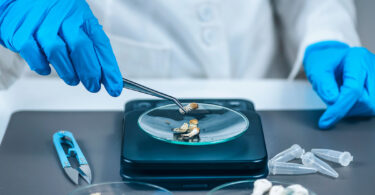
UGA chemist Jason Locklin and graduate students Nicholas Marshall and Kyle Sontag grew polymer brushes, made up of chains of thiophene and benzene, aromatic molecules sometimes used as solvents, attached to metal surfaces as ultra-thin films.

“The molecular wires are actually polymer chains that have been grown from a metal surface at very high density,” said Locklin, who has a joint appointment in UGA’s Franklin College of Arts and Sciences and on the Faculty of Engineering. “The structure of the film resembles a toothbrush, where the chains of conjugated polymers are like the bristles. We call these types of coatings polymer brushes. To get chains to pack tightly in extended conformations, they must be grown from the surface, a method we call the ‘grafting from’ approach.”

Using this approach, the scientists laid down a single layer of thiophene as the film’s initial coating, then built up chains of thiophene or benzene using a controlled polymerization technique. Their research, funded by the Petroleum Research Foundation, was published in the June issue of the journal, Chemical Communications.

“The beauty of organic semiconductors is how their properties change, based on size and the number of repeating units,” said Locklin, who is a member of UGA’s Nanoscale Science and Engineering Center. Thiophene itself is an insulator, said Locklin, “but by linking many thiophene molecules together in a controlled fashion, the polymers have conducting properties.”

More importantly, he said, “this technique gives us the control to systematically vary polymer architecture, opening up the possibility for various uses in electronic devices such as sensors, transistors and diodes.” The ultra-thin films are between 5 and 50 nanometers—too small to see, even under a high-powered optical microscope.

Locklin said it’s difficult to harness a fuel source in the body, such as glucose, for use in biofuel cells that could replace the need for batteries in an implanted device. And while humans have enzymes in the body that do a good job of converting chemical energy into electrical energy, “they aren’t very useful in this application because they have natural protective insulating layers that prevent good electron transport from active site to electrode,” he said. “Hopefully our molecular wires will provide a better conduit for charges to flow.”

While “flexible electronics” is a large and growing area of research, it’s still in its infancy, Locklin said. “For example, we don’t yet understand all of the fundamental physics involved in how electrical charges move through organic materials.”

The next step for Locklin is to develop appropriate applications. For example, his polymer brush technique might be used in a range of devices that interface with living tissue, such as biochemical sensors, prosthetic limbs, pacemakers or bionic ears. “The film itself might be used in transistors—or in photovoltaic devices such as solar cells,” said Locklin.

##


Top of Page


Today is Sunday, November 22, 2009 05:32 PM EST

UGA Today is produced by the UGA News Service, a unit of UGA Public Affairs.
Hodgson Oil Building, Suite 200N
286 Oconee Street
Athens, GA  30602-1999
Phone 706/542-8083 • Fax 706/542-3939
Questions, comments and suggestions should be directed to news@uga.edu


UGA Home | External Affairs | Columns | Georgia Magazine
Publications / UGA Identity Materials | Broadcast and Video | Photographic Services
UGA Athletics | UGA Events | Visitors Center | Admissions | Directories | Search